
Information and Pre-Election Manipulative Social Media Tactics
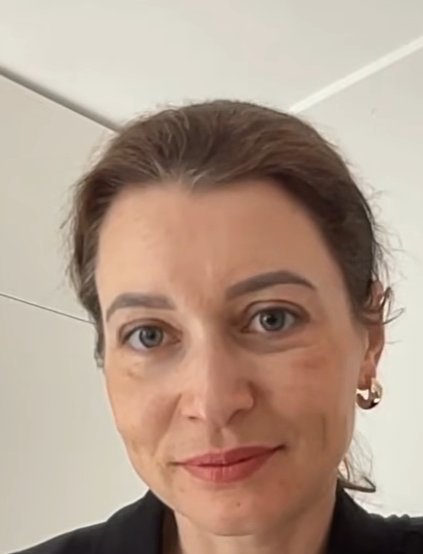
As election day draws near, the Latvian National Federation in Canada (LNAK) invited Inga Spriņģe, an investigative journalist well known in Latvia, to speak with us. She has extensive experience researching disinformation, Russian influence operations, and social inequality. The journalist also gives lectures on critical thinking and has previously moderated pre-election debates on Latvian Television. The full interview with I. Spriņģe is available on the LNAK YouTube channel.
In recent years, politicians have become very active on social media (Facebook, Instagram, TikTok). They share content they create themselves. This year, political parties are no longer allowed to run paid ads on a major platform like Facebook, so other communication channels are becoming increasingly important.
I. Spriņģe explains that the social media content created by politicians is very “polished,” and that it is one-way communication rather than a real conversation—merely an illusion of a conversation. No questions are asked and no answers are expected, as is the case, for example, on radio or television broadcasts, where professional journalists interview representatives of political parties. The most important thing to pay attention to is whether a politician explains what he is doing or will do, or whether he merely criticizes and insults his opponents. This is exactly what we’ve seen most often on social media in recent years. Journalist I. Spriņģe explains that this is due to several factors, but primarily to social media algorithms. For anyone to get noticed on these platforms, they must share emotional content, which, unfortunately, often means negative or angry messages, since those attract the most attention. This is precisely the kind of content that social media users share most often, because it angers them. That is why politicians use it—they know it will reach both their supporters and their opponents. I. Spriņģe cites a study that found that when a politician criticizes an opponent, social media followers share that content twice as often as they do content addressed to the politician’s own voters.
I. Spriņģe also notes that opposition parties are particularly savvy when it comes to creating social media content, since news about these parties appears less frequently in mainstream media as well as in the content of major and traditional media outlets. Mainstream media tends to report on the parties in power, and that, of course, is one of their roles. That is why opposition parties have a good understanding of social media algorithms, which work best with negative news, angry, and even hateful messages. Of course, parties make the most of this right before elections, often creating their own “events”—artificially staged occurrences that are part of the pre-election campaign.
The first and most important resource ahead of the Saeima elections is the Central Election Commission’s website (www.cvk.lv). The CVK website features a section titled “Voting Outside Latvia.” Six polling stations will be open in Canada, and all will be accessible to voters with mobility impairments. On Election Day, October 3, polling stations will be open in Edmonton, Montreal, Toronto, Hamilton, Ottawa, and Vancouver. You can apply to vote by mail until September 25 (Friday).
Information about the election, as well as helpful videos and publications, can be found on the Latvian National Federation in Canada (LNAK) website, lnak.net, under the section “15th Saeima Elections on October 3.”
Reliable and professionally produced content can be found on “Latvijas sabiedriskais medijs” (lsm.lv). The program “Krustpunktā” is also available on Spotify. The “lsm.lv” section“2026 Saeima Elections”can also help you make a choice; there you’ll find the “PartySorting Tool,”a tool that helps you find the political party whose views and positions most closely align with your own before the elections. You can also exclude parties you do not want included in the results.
The website of the Baltic Center for Investigative Journalism “Re:Baltica” (rebaltica.lv) features a valuable section titled “Elections 2026.”
Laura Hofmane
The interview and this article were prepared with financial support from the Society Integration Foundation, funded by the Latvian stage budget. LNAK is responsible for the content.
#DiasporasNVO2026